End-to-End Leasing Automation
See how much time, effort, and complexity you can eliminate with LeaseArc.
- AI Lease abstraction
- Portfolio intelligence
- Lease Compliance
- CAM reconciliation
Reduce manual effort, eliminate bottlenecks, and scale with confidence.
Try it Free
If you have been researching automated leasing, you’re probably trying to find answer for a simple question: how much of my leasing process can actually be automated?
The answer is: much more than you realize. A few years ago, leasing automation mostly meant setting up email templates and reminders. Today, the conversation is entirely different. Thanks to AI, tasks that once required multiple people and hours of manual effort can now run on autopilot. From responding to inquiries and qualifying prospects to scheduling tours, processing applications, drafting agreements, and onboarding the tenant, everything can be automated.
Yes, you read that right. ‘Everything’. But the catch here is choosing the right tool that actually delivers value. Nearly every leasing platform today is claiming to offer AI-powered automation! But in reality, not all of them are built the same. Some tools focus on prospect communication and tenant engagement, while others focus on lease abstraction, compliance tracking, and document workflows. The capabilities vary significantly. And it’s often difficult to figure out which solutions are worth considering.
In this guide, we’ll explore what automated leasing actually looks like, steps to evaluate and choose the right solution, and top 5 leasing automation tools available today.
Table of Contents
See how much time, effort, and complexity you can eliminate with LeaseArc.
Automated leasing is the process of using AI-powered tools to handle the repetitive tasks involved in leasing. This includes prospect communication, lead qualification, tour scheduling, document processing, due diligence, reconciliation, escalations, compliance, critical date tracking, and lease administration.
The goal is simple: to replace disconnected tools, reduce manual effort, eliminate operational bottlenecks, and improve efficiency throughout the leasing lifecycle.
In the traditional lease management process, you would see a property manager juggling multiple tools, spreadsheets, phone calls, email threads, documents and paperwork. It’s basically built around manual coordination.
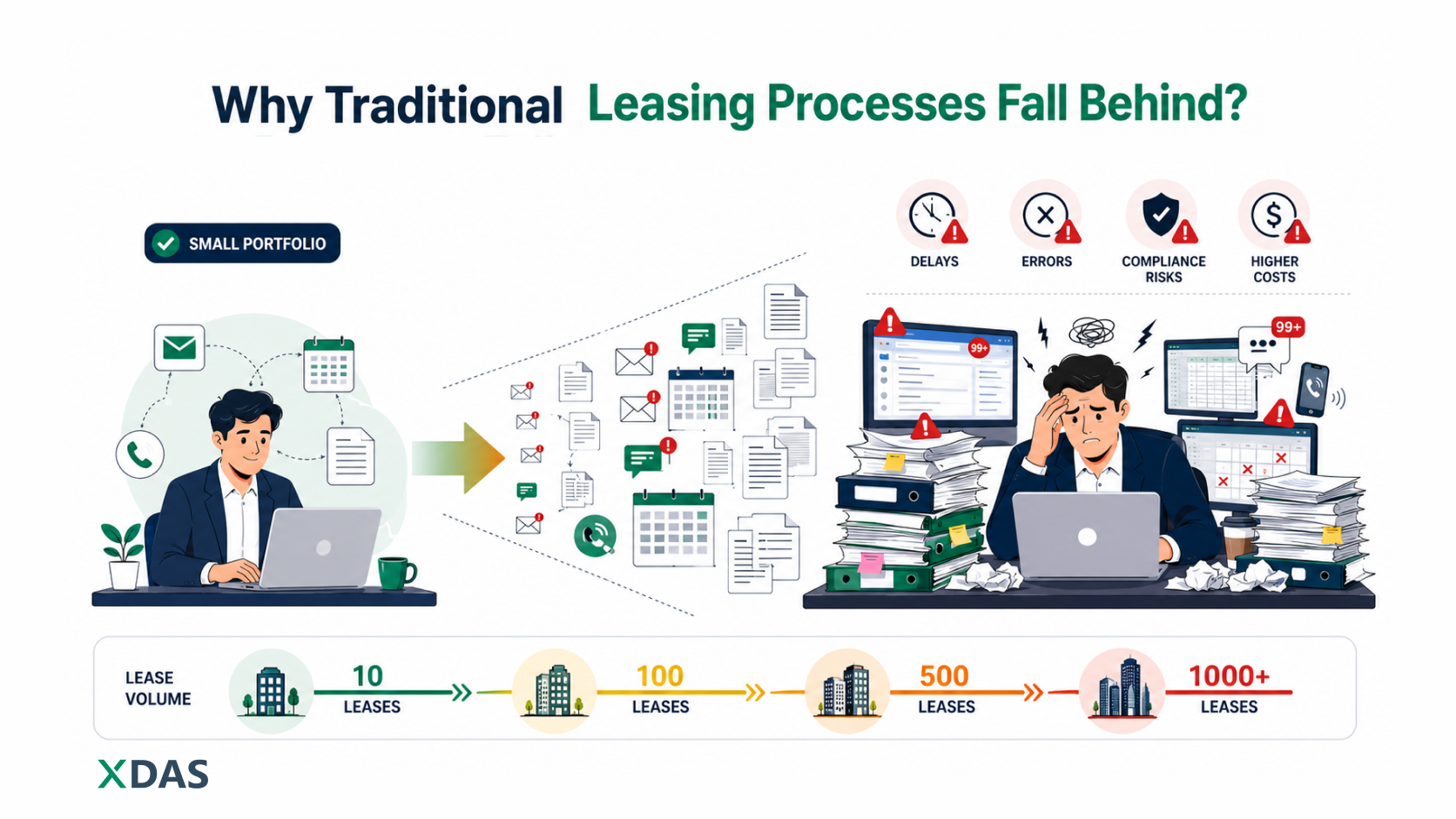
Handling leasing this way might seem manageable when you’re dealing with a small portfolio. But when the number of clients grows? Or when the portfolio expands? For sure, it would become a disaster. Delayed responses, missed deadlines, compliance risks, billing discrepancies, and the list is never ending. Overtime, this not only drains your time and resources, but heavily increases the cost per lease.
|
Aspect |
Automated leasing |
Traditional leasing |
|
Approach |
Proactive, with automated monitoring, alerts, and workflows that prevent delays and errors. |
Reactive, with teams chasing updates and resolving issues as they occur. |
|
Prospect communication |
Prospects get instant responses and timely follow-ups, even outside business hours. |
Response times are slow and often dependent on human agents' availability. |
|
Tenant screening |
Automated background and credit checks to identify qualified tenants faster. |
Hours spent on manually reviewing applications and supporting documents. |
|
Tour scheduling |
Prospects can book tours instantly based on your availability. |
Requires constant back and forth coordination between prospects and staffs. |
|
Lease administration |
Automated workflows centralize lease management and reduce administrative effort. |
Lease records, documents, and critical dates are tracked manually across multiple systems. |
|
Scalability |
Easily scalable without a significant increase in workload. |
Often requires additional resources and manual effort. |
|
Operational efficiency |
Faster and more cost-effective leasing operations. |
Time-consuming and resource-heavy. |
These differences will become more apparent when the lease volume grows.
You already know that automated leasing is better than managing everything manually, and that's probably why you're here! So, what exactly do you gain from it?
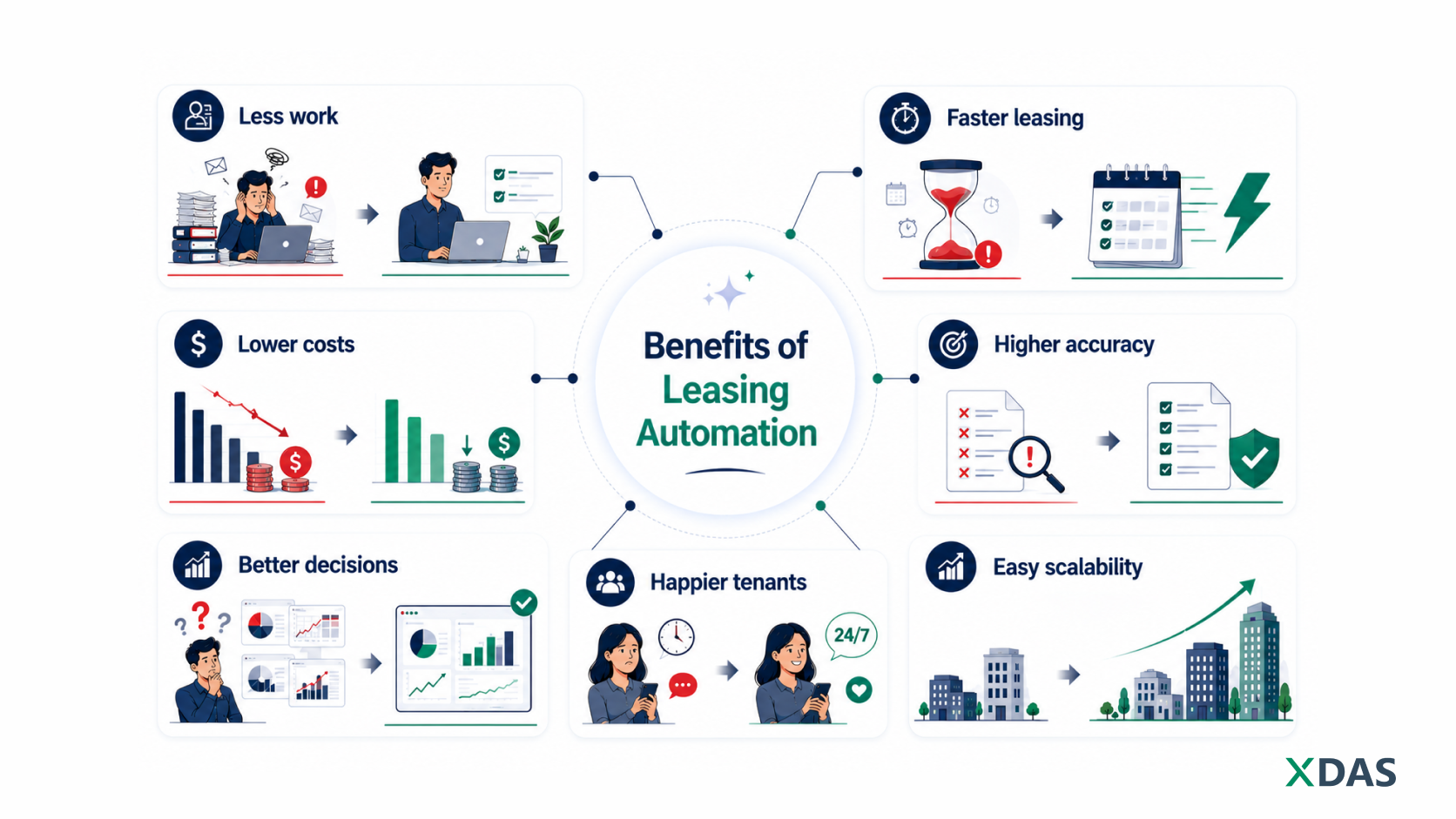
A large portion of the leasing process often involves repetitive tasks, such as follow-ups, scheduling, document handling, etc,. Automating such tasks saves a considerable amount of time and effort for your team, allowing them to focus on the work that actually requires human attention.
When every task depends on manual coordination, delays are unavoidable. One missed email or delayed approval can hold up the entire workflow. And, those add up really quick. AI keeps the leasing operations moving without any unnecessary bottlenecks, leading to increased productivity and faster leasing cycles.
Obviously, reduced manual work = reduced overhead. But, the cost of manual leasing isn’t just limited to salaries. Think of delayed responses, billing errors, and missed opportunities. Those are all forms of lost revenue, that often goes unnoticed. With automation, you can reduce such hidden costs, while making better use of the existing resources.
Anyone who has managed leases knows how a small oversight can turn into a much bigger issue later. It happens more often than you realize. Automated workflows helps maintain consistent records, reduce data entry errors, minimize compliance risks and ensure critical deadlines are not missed.
When the data is spread across disconnected systems, getting a clear picture of what’s happening becomes difficult. With access to real-time leasing data and portfolio intelligence, you can identify risks earlier, spot trends faster and make more informed decisions.
Nobody likes to wait days for response, especially when they’re actively looking for a property. AI assistants ensure prospects get answers quickly by being available 24/7 and following up at the right time. After all, first impression matters. The result? Smoother leasing experience, happy tenants and better retention rates.
What works for 10 leases may not work for 1000. AI-powered automation makes it easier to handle a growing lease portfolio, without constantly adding more people, processes or administrative overhead.
See how much time, effort, and complexity you can eliminate with LeaseArc.
Most of the leasing automation solutions promise the same thing: less manual work, better efficiency. But once you start comparing, you’ll realize that their capabilities vary a lot. Here are the key steps for evaluation:
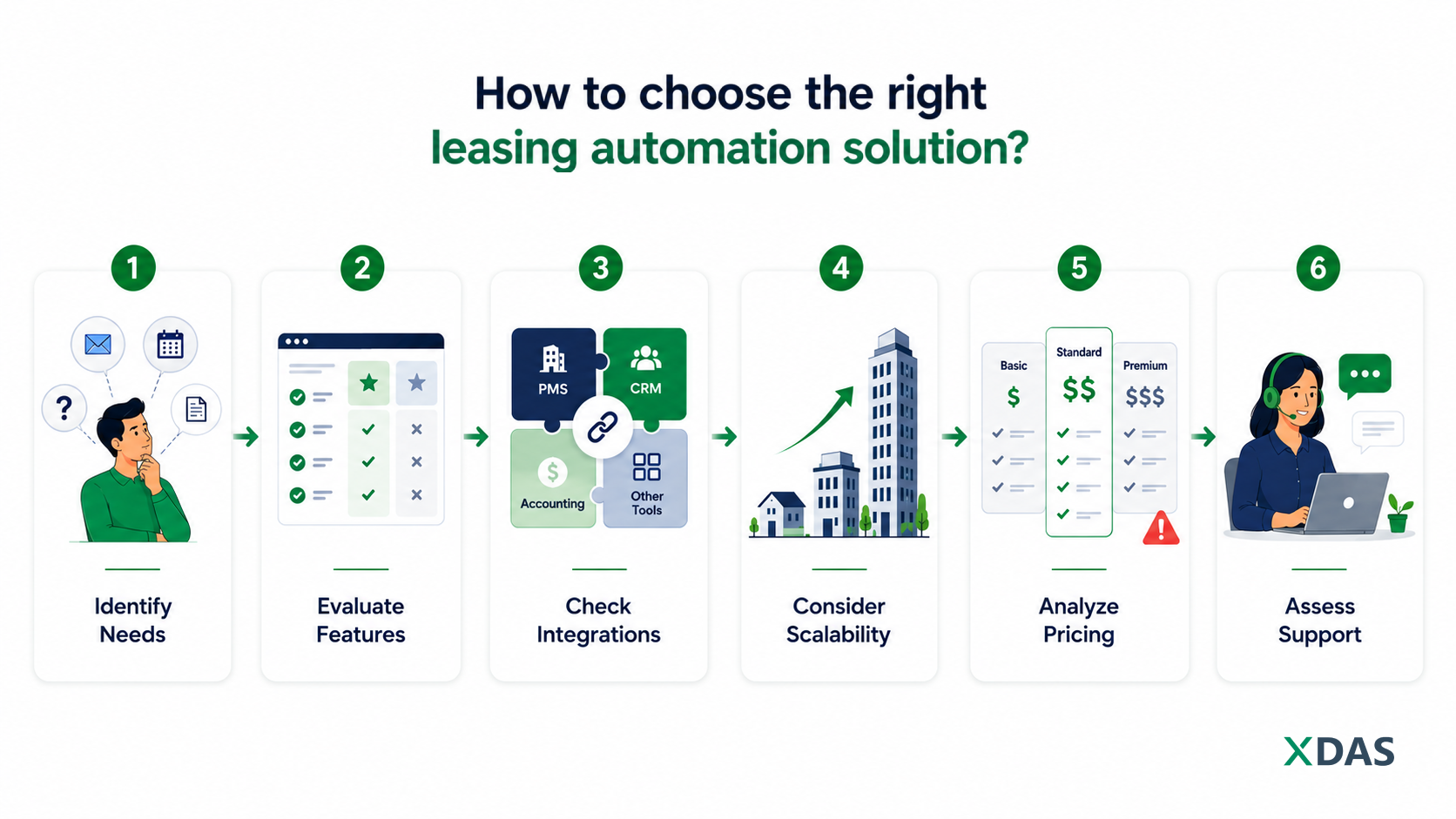
Before looking at the vendors, get clear on what you need. Identify where your team is spending most of their time. Is it responding to inquiries? Screening applicants? Scheduling tours? Managing lease documents? Or tracking critical dates? List down your biggest pain points. Otherwise, you’ll get distracted by the fancy unnecessary features.
Now compare the features provided by each vendor by mapping them against your pain points. Focus on how well they could address your specific challenges, rather than choosing the one with the long feature list. This makes the selection process much easier. Sounds simple, right?
Make sure the platform seamlessly integrates with your existing tech stack. Let it be property management system, CRM, accounting software, or other business tools, it should sync smoothly. Believe it or not, this has a major impact on both implementation and day-to-day operations.
What works for your business today should also work for at least a few years from now. As your portfolio grows, the platform should be able to handle the increased lease volume, without requiring any additional resources or major changes. It’s definitely worth thinking ahead rather than regretting later.
Each provider might have a different pricing structure. Some charge based on the number of units (subscription-based), while others charge based on usage or module requirements. Consider the total cost of ownership, including implementation, onboarding, support, and any add on fees. Also, keep an eye out for hidden costs.
Evaluate the quality of the support provided, including training, implementation assistance, and ongoing support. Trust me, this matters more than you realize. A responsive support team could make adoption much easier, or else it would quickly turn out into a frustrating experience.
While the exact requirements may vary depending on your business, there are some core features which you can’t neglect. Here’s what should be on your checklist:
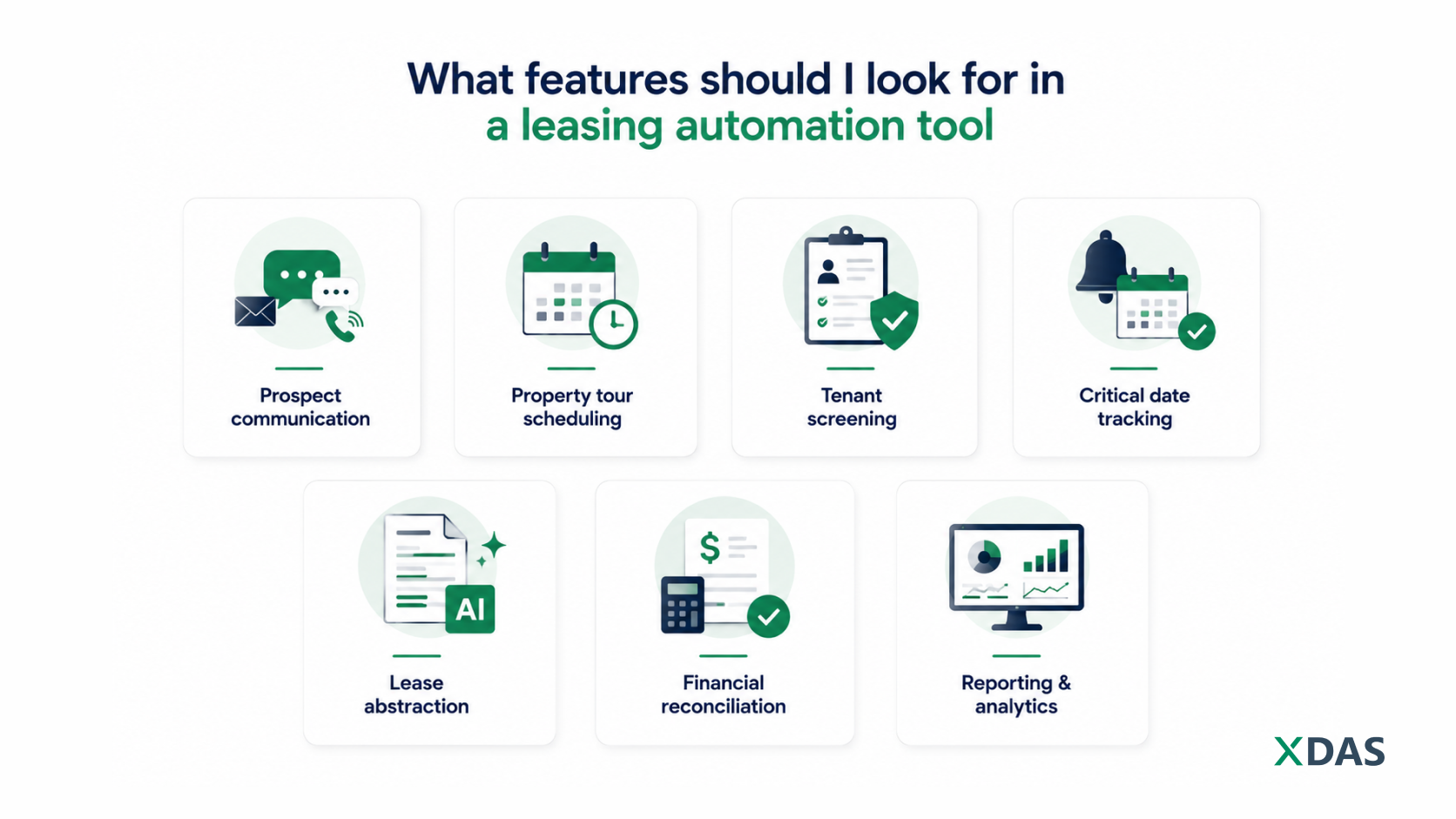
Responding to inquiries instantly is critical. The platform should be able to engage prospects across email, chat or voice calls, and automatically followup when needed. If not, chances are high that the lead can move on to the next property.
Tour scheduling shouldn’t require back and forth emails. Look if the tool could sync with your calendar, show real-time availability, and allow prospects to book showings on their own. This feature can create a big difference to the overall experience.
Screening may sound simple, but is one of the most time-consuming parts of the leasing process. Automating application reviews, credit scoring and background checks can significantly speed up things and helps you identify qualified tenants faster.
If you’ve ever searched a lengthy lease agreement for a specific clause, you’ll understand why this matters. Check if the tool has AI powered lease abstraction capabilities to pull out the key clauses and obligations from piles of unstructured documents. A real time saver.
Renewals, expirations, notice windows, rent reviews…there’s a lot to keep track of. Missing even one critical date can create unnecessary headaches. Which is why automated critical date tracking and alert features are something that cannot be compromised.
Financial discrepancies are hard to spot when managed manually. Check if the tool could automatically handle reconciliations, identify billing errors and improve financial accuracy. It’s a plus if it supports accounting compliance requirements.
At the end of the day, you need complete visibility into what’s happening across your portfolio to make informed decisions. For which, a centralized dashboard is a must to track lease status, monitor performance, identify operational bottlenecks, and spot potential risks before they become bigger issues.

LeaseArc is an agentic AI-powered solution designed to automate your leasing process end-to-end. It acts like a leasing agent working 24/7, helping you streamline your operations and reduce manual workload.
Custom pricing based on your usage.
Property managers looking to automate their entire leasing lifecycle.
Pros
Cons

Appfolio is a cloud-based property management platform designed to streamline rental operations. It helps you automate various parts of your leasing process, starting from the first inquiry to their move-in day.
Subscription-based pricing with tiered plans.
Enterprise-level companies handling large-scale portfolios.

Funnel Leasing is an AI-powered CRM and leasing automation platform built for multifamily property managers. It supports the renter journey from inquiry to renewal, streamlining operations.
Tiered pricing plans, with base plan starting at $2.05 per unit/month. Set-up fees will be charged additionally.
Multifamily operators managing high lead volumes across multiple properties.

Lethub is an AI-powered leasing automation platform used by property managers to automate renter communication. It captures, nurtures, and converts leads on autopilot mode.
Tiered pricing plans, with base plan starting at $49/month for 2 units. Additional fees will be charged for onboarding (starts at $199) and any add-on features you need.
Small to mid-sized property management companies handling high inquiry volumes.
Leasey.AI is an AI leasing assistant that is designed to handle repetitive leasing tasks automatically. It replaces your disconnected tools with a single system that handles the entire leasing process.
Pricing plan starts at $49 per month for managing up to 20 units.
Small property management companies managing growing rental portfolios.
See how much time, effort, and complexity you can eliminate with LeaseArc.
The leasing operations of every business is different. The challenge is finding a solution that fits the way your business works, rather than forcing you to adapt your workflows around the software.
That’s where LeaseArc stands out.
LeaseArc is built on XDAS, a robust data automation engine. You don’t just get a static software template; we tailor your automation workflows exactly as you operate. Whether you’ve any unique workflows, specific reporting requirements, or complex lease structures, the platform can be configured to align with your needs.
As your portfolio grows, that flexibility becomes increasingly important. Instead of juggling multiple disconnected tools, you get a solid foundation for your leasing activities. So, scaling becomes much easier.
In short, LeaseArc serves as the system of record for your lease portfolio, offering flexible customization and maximum automation. Means you don’t have to change the way you work.
Try LeaseArc for free and see how leasing automation works in your real-world workflows.
What is AI leasing?
AI leasing is the use of an AI-powered leasing assistant to handle repetitive tasks automatically. It includes answering prospect questions, scheduling tours, and sending follow-ups.
What is leasing automation?
Leasing automation is the process of using software solutions to automate and streamline the day-to-day lease management process. It helps you minimize errors, reduce manual effort, and improve efficiency.
What is the best lease management software?
There is no single ‘best’ lease management software for every portfolio in the market. It’s the one that actually fits your leasing operations, portfolio size, and other requirements you may have. Popular options include LeaseArc, AppFolio, and Funnel Leasing.
How much does lease management software cost?
The pricing of lease management software usually depends on your portfolio size and the features or modules you need. Most platforms offer custom pricing based on your specific requirements.
See how much time, effort, and complexity you can eliminate with LeaseArc.
Written by: Suvetha Sukumar


